8 hr
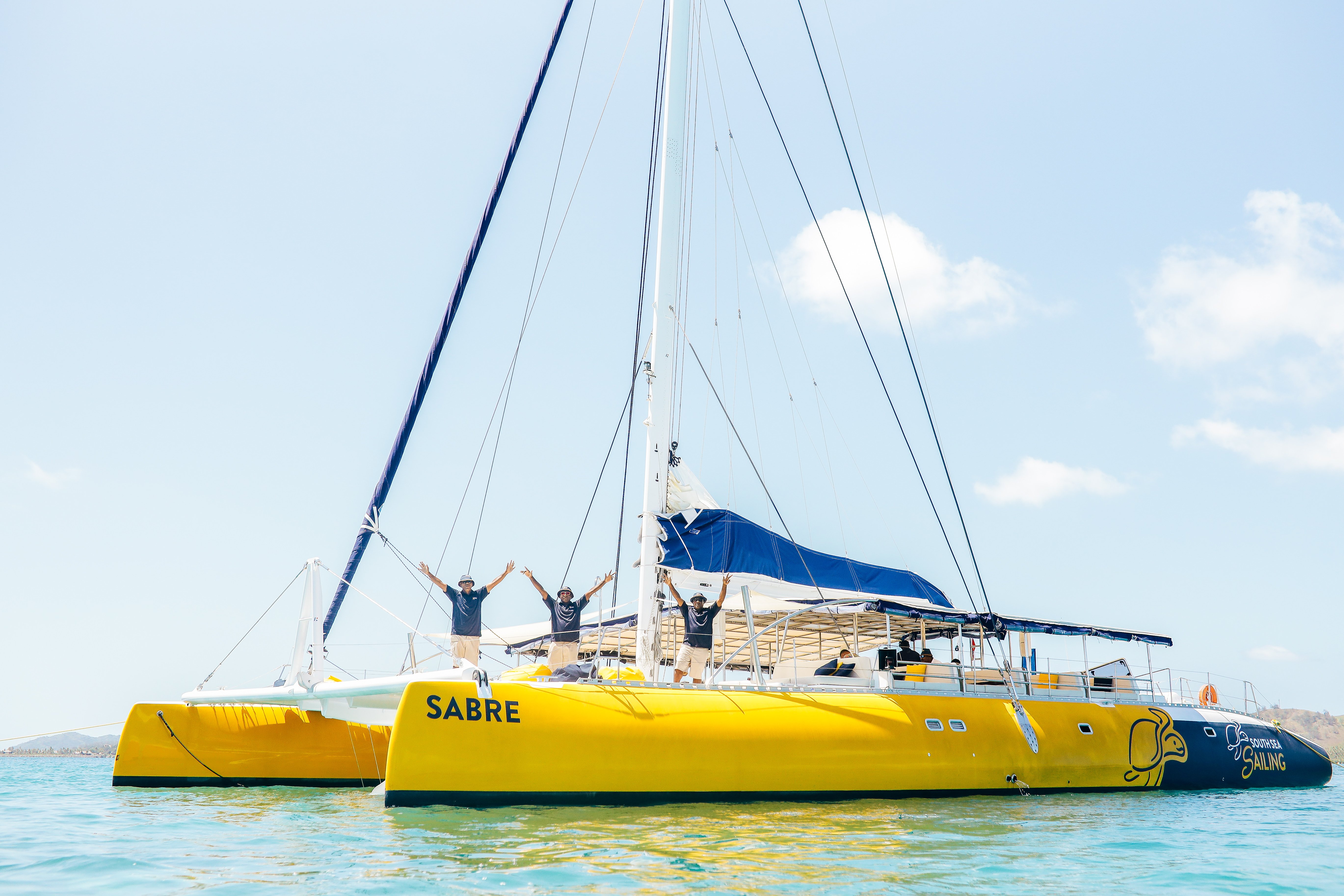
Mamanuca Islands Day Cruise with Monuriki & Mana Sand Bar
- Expert local guide
- Small group
- Skip-the-line access
- Free cancellation
Fiji Shark Dive Kuata — Reef Shark Encounters at Barefoot Kuata
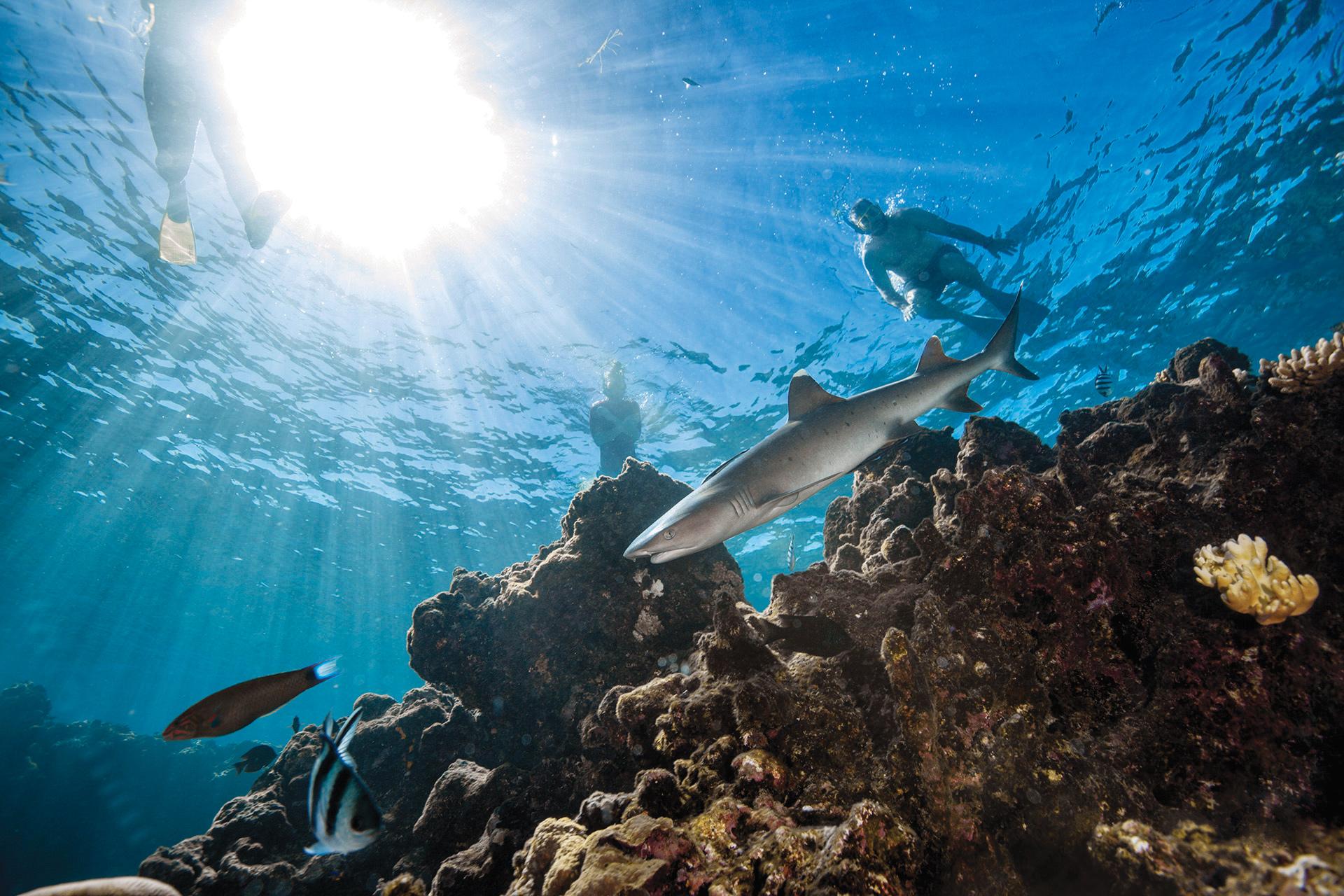
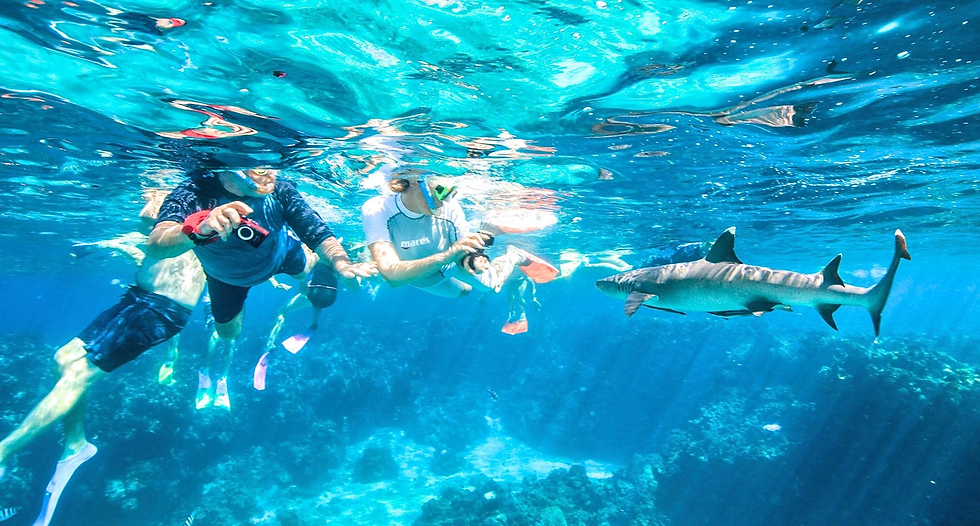
Reef sharks patrol the drop-off, coral holds the morning light.
Compare fares, pick the fit — all bookings are mobile-voucher and eligible for free cancellation where shown.
8 hr
8 hr
7 hr
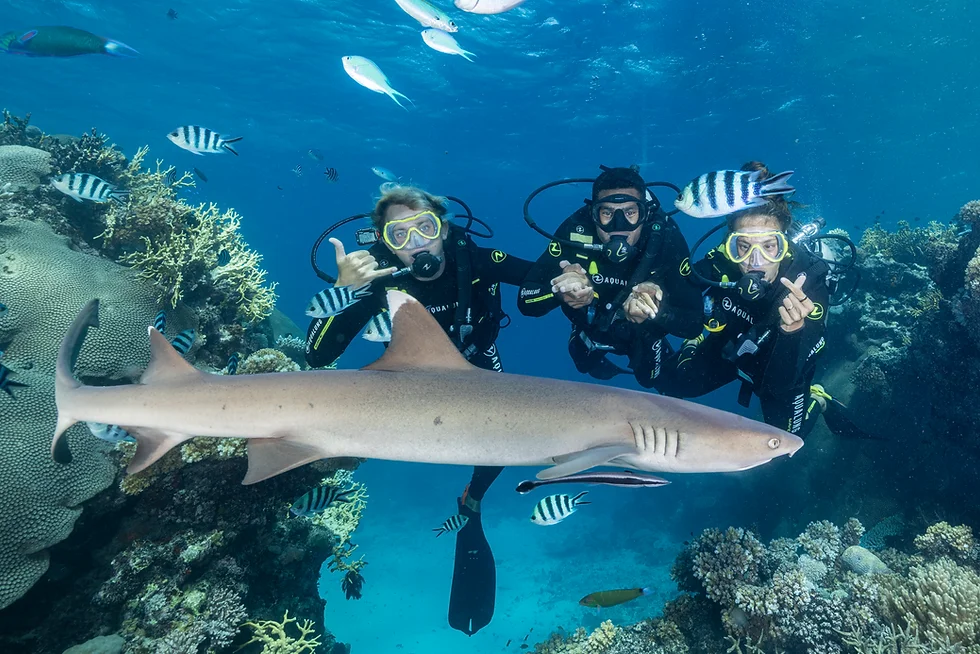
Visitors seeking a fiji shark dive kuata encounter can choose between specialized, guided aquatic experiences that range from snorkeling with reef sharks to introductory scuba dives. These curated fiji shark dive kuata tours offer distinct levels of underwater engagement depending on your comfort and certification status.
|
Top pick Reef Shark Snorkel Guided surface encounter |
Introductory Shark Dive Guided underwater exploration | |
|---|---|---|
| Diving Certification | None required | None required |
| Target Species | White and Black Tip Reef Sharks | White and Black Tip Reef Sharks |
| Guided Experience | Fully guided with marine team | Fully guided with instructors |
| Primary Activity | Surface level swimming | Underwater scuba breathing in marine sanctuary |
| Conservation Component | Shark ecology overview included | SSI Shark Ecology program with certification |
| Best for | First-timers and snorkelers | Beginners curious about scuba |
| See tickets & prices |
Verdict: The Reef Shark Snorkel is the optimal choice for most first-time visitors seeking a secure yet accessible shark encounter, while the Introductory Shark Dive is better for those wanting to experience scuba basics.
Worth it for divers chasing bull sharks
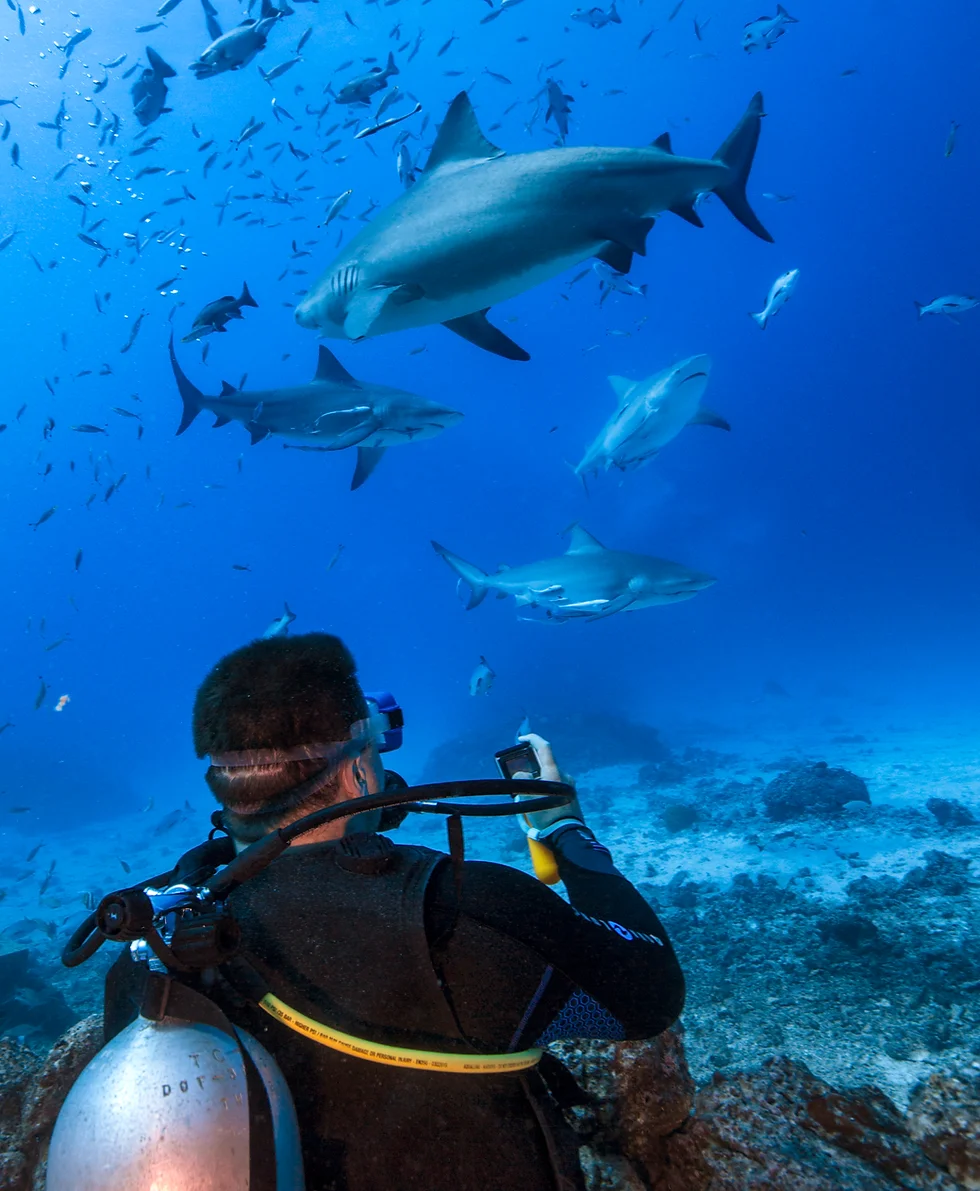
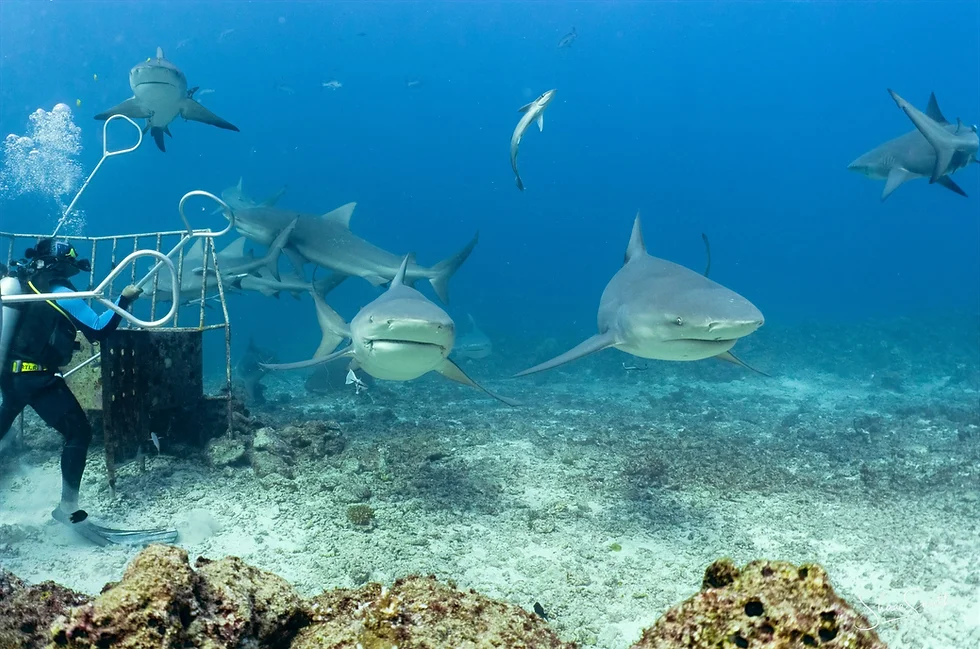
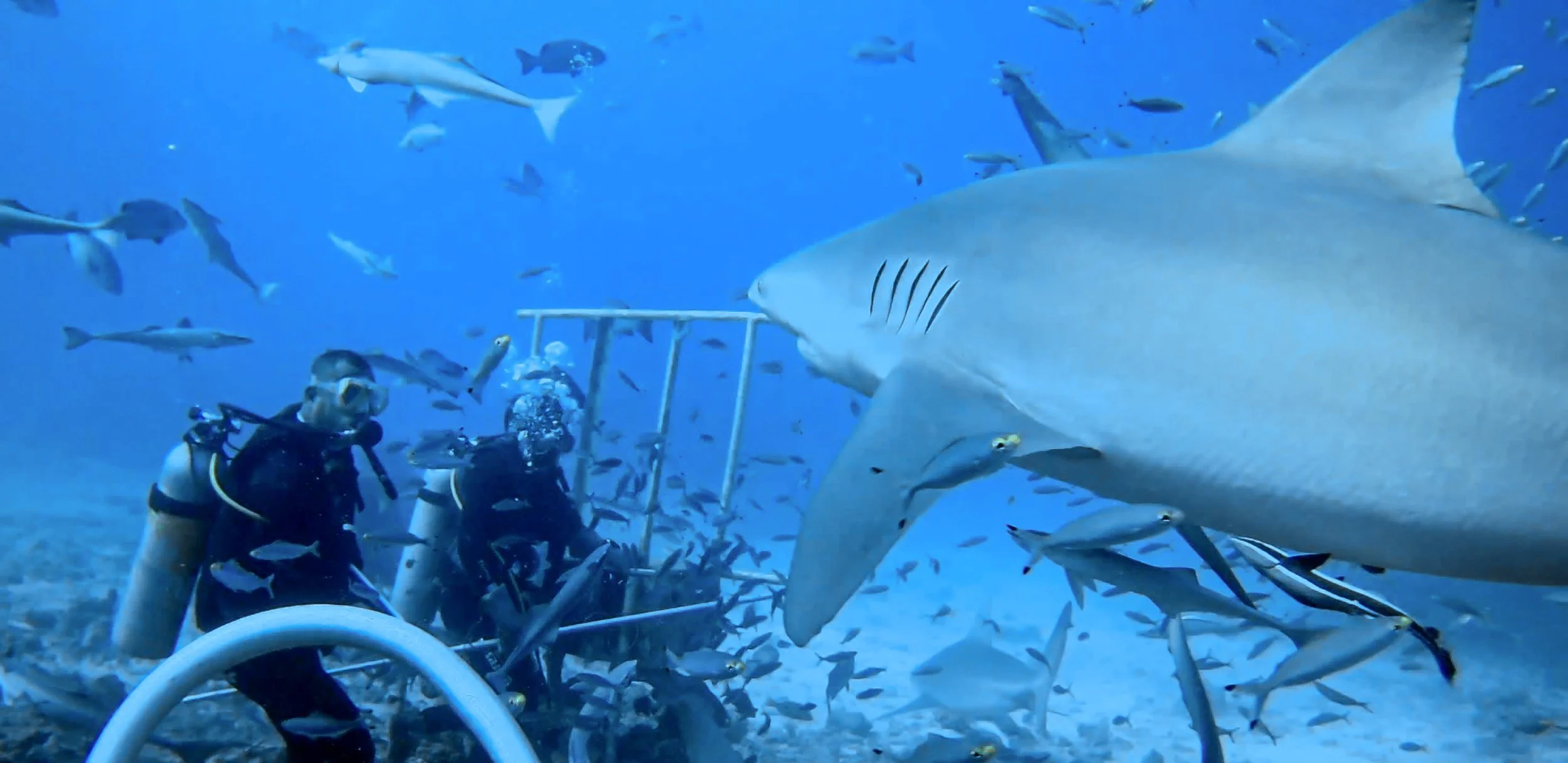
The fiji shark dive kuata sits in a different category from the reef shark snorkels sold across the Mamanucas. Barefoot Kuata's house site draws bull sharks — thick-bodied, three-metre-plus animals that hold station in the current while a baited feed runs — alongside grey reef, whitetip and the occasional tawny nurse. Most Fijian shark encounters deliver blacktips in a metre of water; this one puts you on a sand channel with apex predators and a briefed safety team. The 25 FJD marine conservation fee, per person, goes to the local qoliqoli reserve that made the aggregation possible, so the encounter funds the protection sustaining it. It pays off for certified divers, confident snorkellers and anyone who has already ticked off catamaran day trips and sand bars. Nervous swimmers, small children and travellers wanting a relaxed beach-club float are better served by the Mamanuca sailing options on this page.
Bottom line: If the bull sharks are the point of your trip, the Kuata shark encounter earns its place; if you want a gentle reef float, book a Mamanuca sailing day instead.
They complement each other; most visitors who do both call Beqa Lagoon the more intense shark experience, while the fiji shark dive kuata offers a more accessible entry point for all levels.
|
Top pick Barefoot Kuata |
Beqa Lagoon | |
|---|---|---|
| Primary Species | Bull, Blacktip, Whitetip sharks | |
| Certification Required | No (Snorkel/Intro Dive) | Yes (Open Water) |
| Dive Depth | 4–10 metres | 18–30 metres |
| Setup Type | Natural encounter / Reef | Baited feeding wall |
| Location | Yasawa Islands | Viti Levu (Pacific Harbour) |
| Travel Time from Nadi | 2-hour ferry | 2-hour drive |
| See tickets & prices |
Verdict: Choose fiji shark dive kuata tours if you prefer shallow reef snorkeling or beginner-friendly dives, whereas Beqa Lagoon tickets are best for certified divers seeking high-intensity bull shark encounters.
Hand-picked experiences loved by thousands of travelers
1 full day
Free Cancellation
Spend a full day on a pristine Fijian island with snorkeling, kayaking, coral viewing, and unlimited drinks
7 hours
Free Cancellation
Full-day sailing voyage through Fiji's stunning island chain with snorkeling, beach visits, and chef-prepared cuisine
6 hours
Free Cancellation
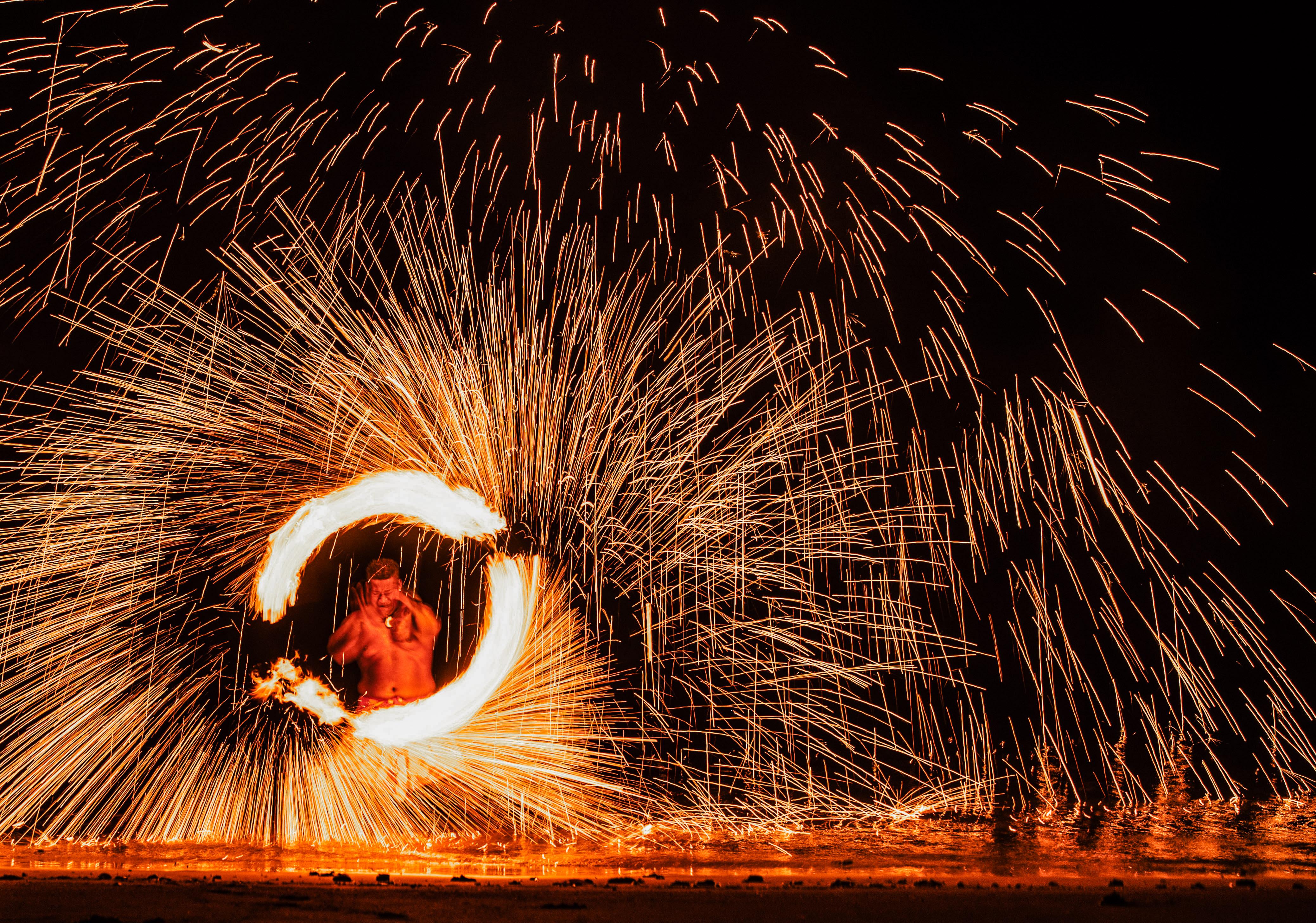
Sail the Tuva River at dusk, feast from an underground lovo oven, and witness thrilling fire dancers on a remote island
1 day (approximately 5 hours on river)
Free Cancellation
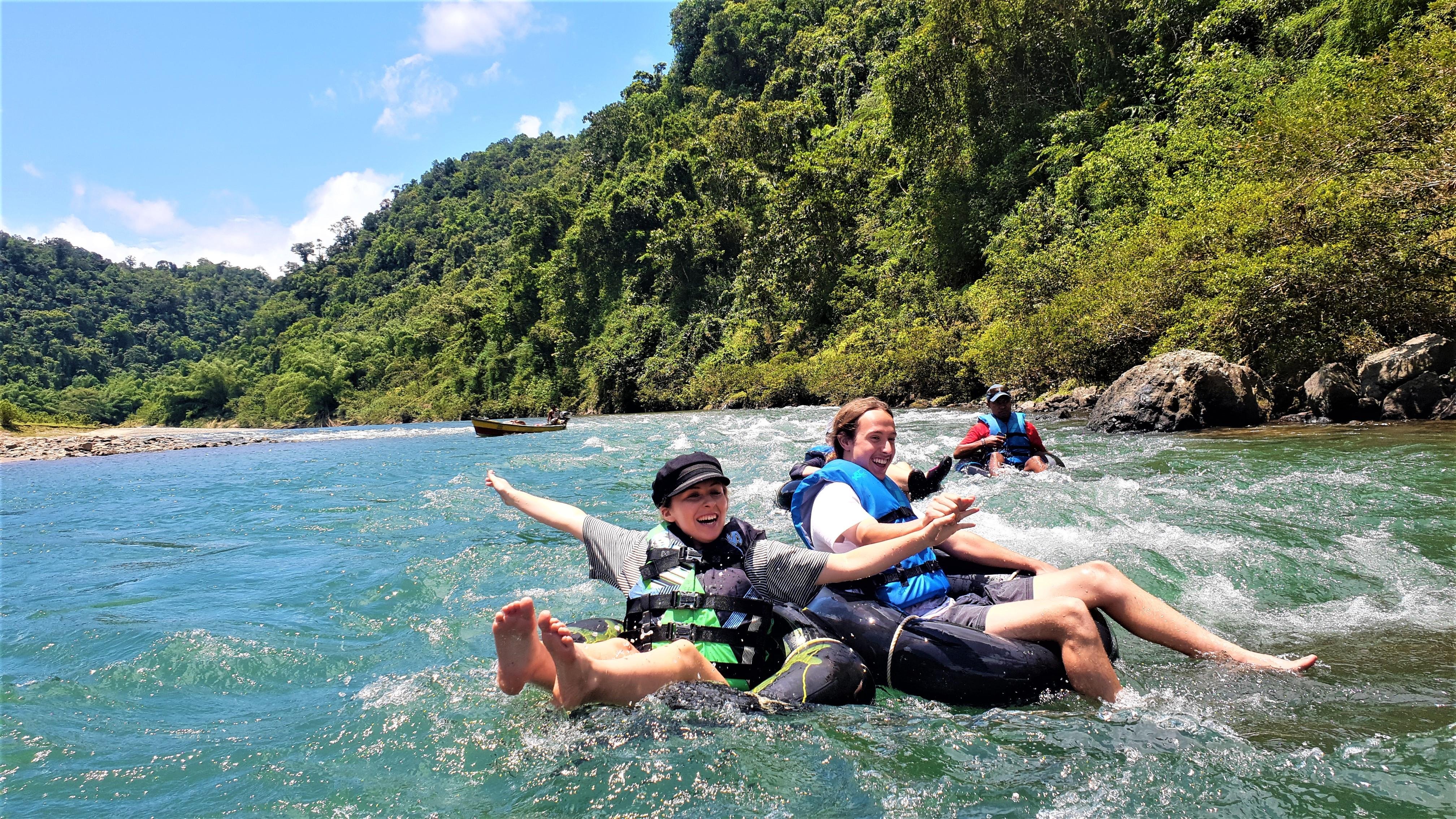
Paddle upstream through dramatic gorges, meet villagers in the highlands, then float back down on tubes
9 hours
Free Cancellation
Journey to the Yasawa Islands for an unforgettable swim alongside reef sharks in crystal-clear waters
5.5 hours
Free Cancellation
Swim with tropical fish, meet sea turtles and iguanas, then unwind on pristine island beaches
4.5 hours
Free Cancellation
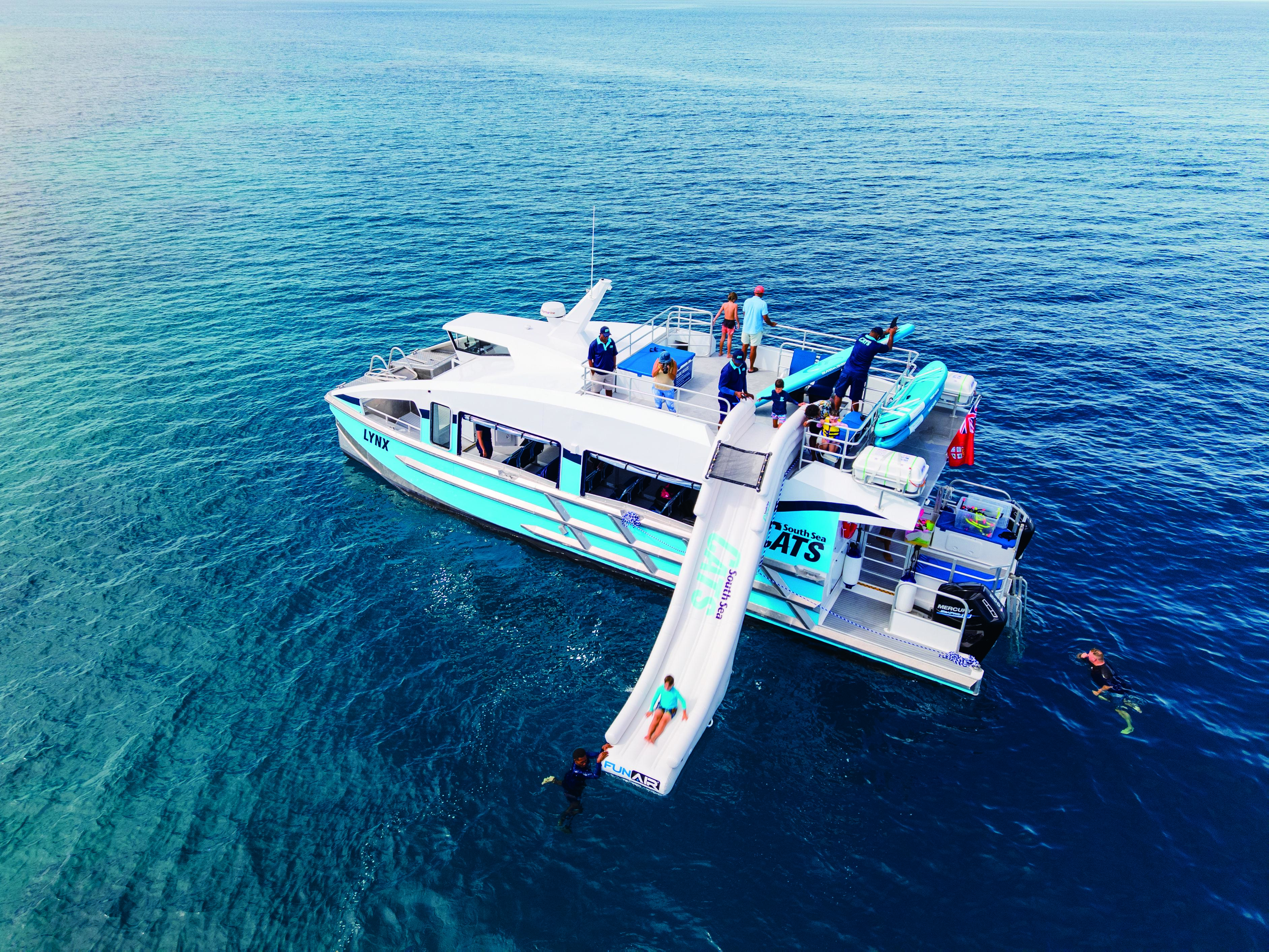
Speed across Fiji's turquoise waters, snorkel vibrant reefs, and splash down an epic inflatable slide
1 day
Free Cancellation
Escape to a pristine tropical paradise for swimming, snorkeling, and beachside dining
You step off the boat at Barefoot Kuata Island Resort, Kuata Island, and the sand is coarse and volcanic underfoot. Check-in for fiji shark dive kuata tickets happens at the dive shack, where you settle the 25 FJD marine conservation fee and hand over your certification card if you have one.
Doors open at 07:30, and the counter runs through to 19:00.
You pull on a rash guard. The briefing takes fifteen minutes: hand position, buddy spacing, what to do if a blacktip cuts across your line. You are told not to touch anything, and you won't want to. The boat leaves the beach and swings north along the shelf.
You drop in backwards. The first thirty seconds are noise and bubbles, then the water clears and the drop-off falls away beneath you into blue. You hover. A blacktip passes below at four metres, then two more. You follow the guide's fin along the coral edge, counting bommies, watching a whitetip settle into a ledge.
Back on the sand by late morning, you rinse your gear at the tap and sit in the shade with salt drying on your arms. Fiji shark dive kuata tours run best in the early window, and you understand why by the time the boat is tied up.
All the details about your upcoming adventure in one place
Kuata is the smallest inhabited island in the southern Yasawa chain, and its volcanic spine rises barely 300 metres above a reef system that predates every structure on it. The rock is andesitic, older and darker than the limestone that shapes much of the group. That geology matters underwater.
Where softer islands slope gently, Kuata's shelf drops abruptly, and the current that runs along it carries nutrients up from deeper water.
The fiji shark dive kuata operation grew out of that accident of bathymetry. Barefoot Kuata Island Resort, on the island's western shore, began running structured shark encounters in partnership with local marine biologists, working under an arrangement with the traditional owners of the reef. The qoliqoli system — customary Fijian fishing rights that extend from the shoreline to the reef edge — governs who may enter these waters and on what terms. A 25 FJD marine conservation fee per person is levied against that framework, funding reef monitoring and the no-take agreements that keep the shelf populated.
The sharks are the point, and they are not fed. Blacktip reef sharks dominate the shallows, joined by whitetips and, in the deeper channel, bull sharks whose seasonal presence has been logged since the programme's early years. Nurse sharks rest on sand patches. Researchers have documented individual animals by dorsal notch and pigmentation, building an identification catalogue that treats the population as residents rather than passing traffic. Yasawa Islands landmarks are usually measured in beaches and sunsets; here the measure is biomass.
What distinguishes Kuata Island shark snorkeling from the aquarium-style encounters elsewhere in the Pacific is the absence of provisioning. Swimmers observe animals behaving as they would without an audience — patrolling the drop-off, cutting through bommies, moving with the tide. The coral gardens that support them are recovering from cyclone damage recorded across the Yasawa group, and staghorn regrowth on the northern reef has been tracked by resort staff since the last major event.
The island's population has never exceeded a few dozen. Fishing sustained it for generations. The conservation levy has, in effect, converted a subsistence relationship with the reef into a stewardship one, and the fiji shark dive kuata tour now underwrites more marine protection than fishing ever displaced.

Yasawa Islands landmarks are usually measured in beaches and sunsets; here the measure is biomass.
Wear swimwear appropriate for open-ocean snorkeling. Rash guards are recommended for sun protection and comfort during the fiji shark dive kuata.
Keep valuables in the provided secure lockers at Barefoot Kuata Island Resort. Avoid bringing non-waterproof bags onto the dive vessels.
Underwater cameras are permitted during the fiji shark dive kuata. Ensure all equipment is properly tethered or buoyant to prevent loss.
Children under a certain age must be accompanied by an adult. Safety gear is available for younger snorkelers participating in the fiji shark dive kuata.
Access to the fiji shark dive kuata boats requires stepping from a beach or jetty. Guests should have basic swimming proficiency to participate.
Consumption of food is prohibited on the dive vessels. Guests can utilize the restaurant facilities at Barefoot Kuata Island Resort before or after the excursion.
Opening Hours
07:30–19:00
Address
Barefoot Kuata Island Resort, Kuata Island, Yasawa Islands, Fiji
Accessibility
Inquire with resort staff regarding boat boarding
Best Arrival
07:30–11:00
Storage
Resort lockers available for dive gear
Location
Yasawa Islands marine park region
Cancellations made within 48 hours of the scheduled activity may incur a fee. A marine conservation fee of 25 FJD per person applies to all participants.
Recommended time
4-6 hours
Planning a fiji shark dive kuata experience requires attention to the tide and marine activity, making the early morning window between 07:30–11:00 essential for your itinerary. Most fiji shark dive kuata tours last half a day, allowing time for briefings, gear fitting, and the aquatic encounter before guests return to the resort. Booking fiji shark dive kuata tickets in advance helps secure your spot, as crowd levels fluctuate throughout the day based on boat transfers to the Yasawa Islands. Access to the underwater marine life is best managed by following these optimal daily schedules.
Crowd levels through the day
The Yasawa Group stayed closed to land-based tourism until 1987. Before that, outsiders saw these islands only from the water. Blue Lagoon Cruises had been sailing the chain since 1950, anchoring off beaches no road reached. Kuata, the southernmost island in the group, was a fishing landscape rather than a resort one. Nothing resembling today's fiji shark dive kuata tours existed. The sharks were simply there, unwatched and uncounted. The decisive shift was Fijian, not foreign. At Shark Reef off Pacific Harbour, divers' fees had been paying coastal villages to stop fishing a reef since 2004. In 2014 that same reef was gazetted as Fiji's first National Marine Park. The template — a levy, a no-take agreement, a monitored population — travelled north. Barefoot Kuata Island Resort applied a comparable arrangement in the Yasawas, where bull sharks and blacktip reef sharks approach shallow water close to shore. The fiji shark dive kuata operation grew directly out of that bargain. Two disruptions tested it. On 20 February 2016 Severe Tropical Cyclone Winston crossed Fiji as a Category 5 system, and the Yasawa Islands spent the following season rebuilding jetties, bures and boats. Then in March 2020 Fiji closed its borders. The ferries stopped, and with them every fiji shark dive kuata tour. Guides returned to gardens and subsistence fishing for twenty months, until Fiji reopened to international travellers on 1 December 2021. What survives is the arrangement itself. The 25 FJD marine conservation fee, charged per person, still funds the reef agreement rather than the vessel. Guides log individual animals by dorsal-fin notches and scarring. Snorkellers enter from a small boat minutes from the sand, which is why this Yasawa Islands shark snorkelling tour reaches people who never learned to dive. Holding fiji shark dive kuata tickets in 2026 means joining a count that has been kept, with interruptions, for over a decade.
Blue Lagoon Cruises began sailing the Yasawa chain, making the islands reachable only by ship.
The film The Blue Lagoon was shot at Nanuya Levu in the Yasawa Group, drawing global attention to the archipelago.
Fiji lifted the prohibition on land-based tourism in the Yasawas, allowing the first island resorts to open.
Fiji's diver-levy conservation model was developed at Shark Reef off Pacific Harbour and gazetted as the country's first National Marine Park in 2014.
Barefoot Kuata Island Resort established a fee-funded shark encounter on Kuata's fringing reef, one of few sites where bull sharks are met by snorkellers.
Severe Tropical Cyclone Winston struck Fiji on 20 February as a Category 5 storm, forcing Yasawa resorts to rebuild jetties, bures and boats.
Fiji's border closure from March 2020 halted ferry services and shark encounters until reopening on 1 December 2021.
The marine conservation fee stands at 25 FJD per person, funding reef protection around Kuata Island.
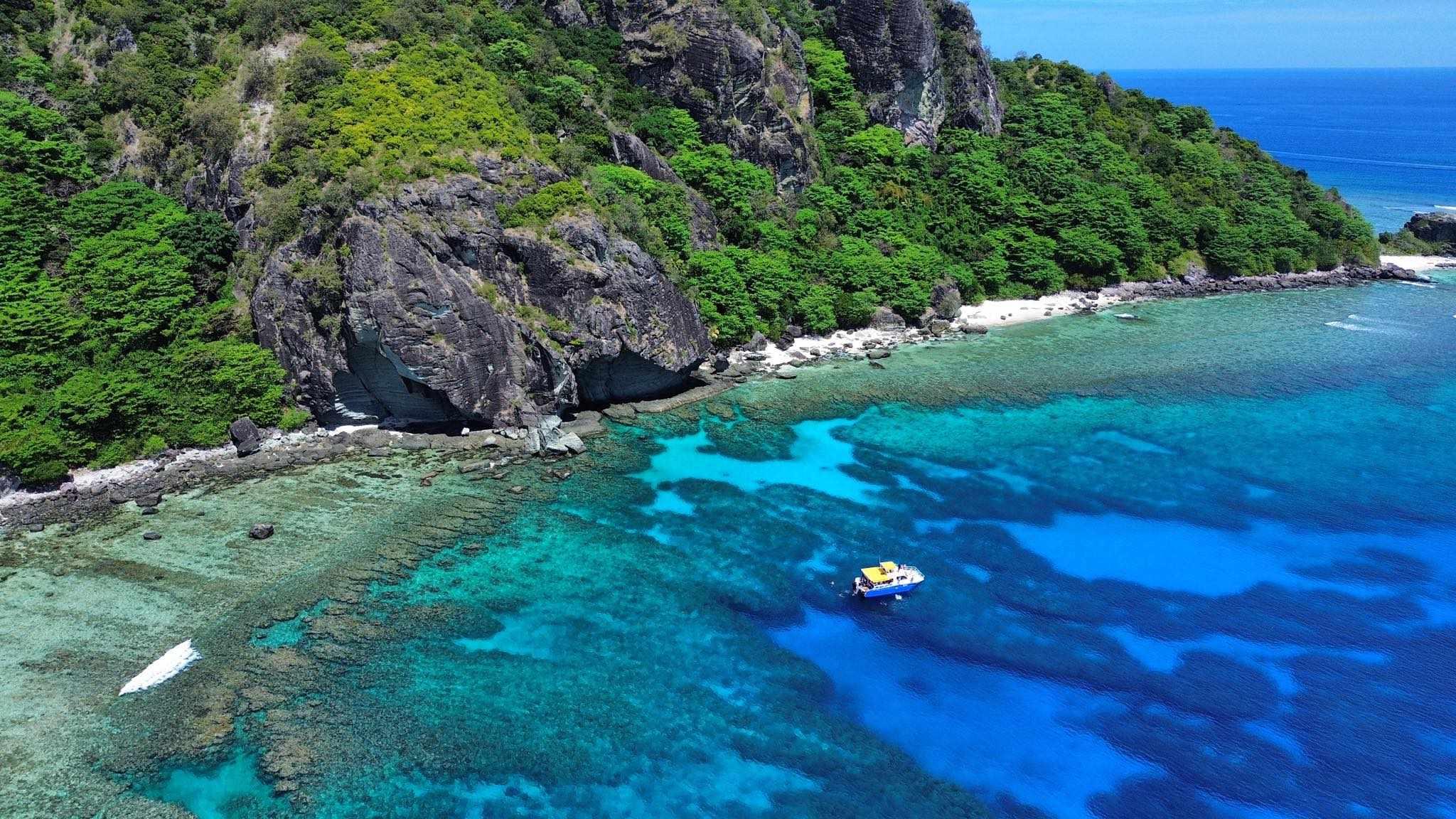
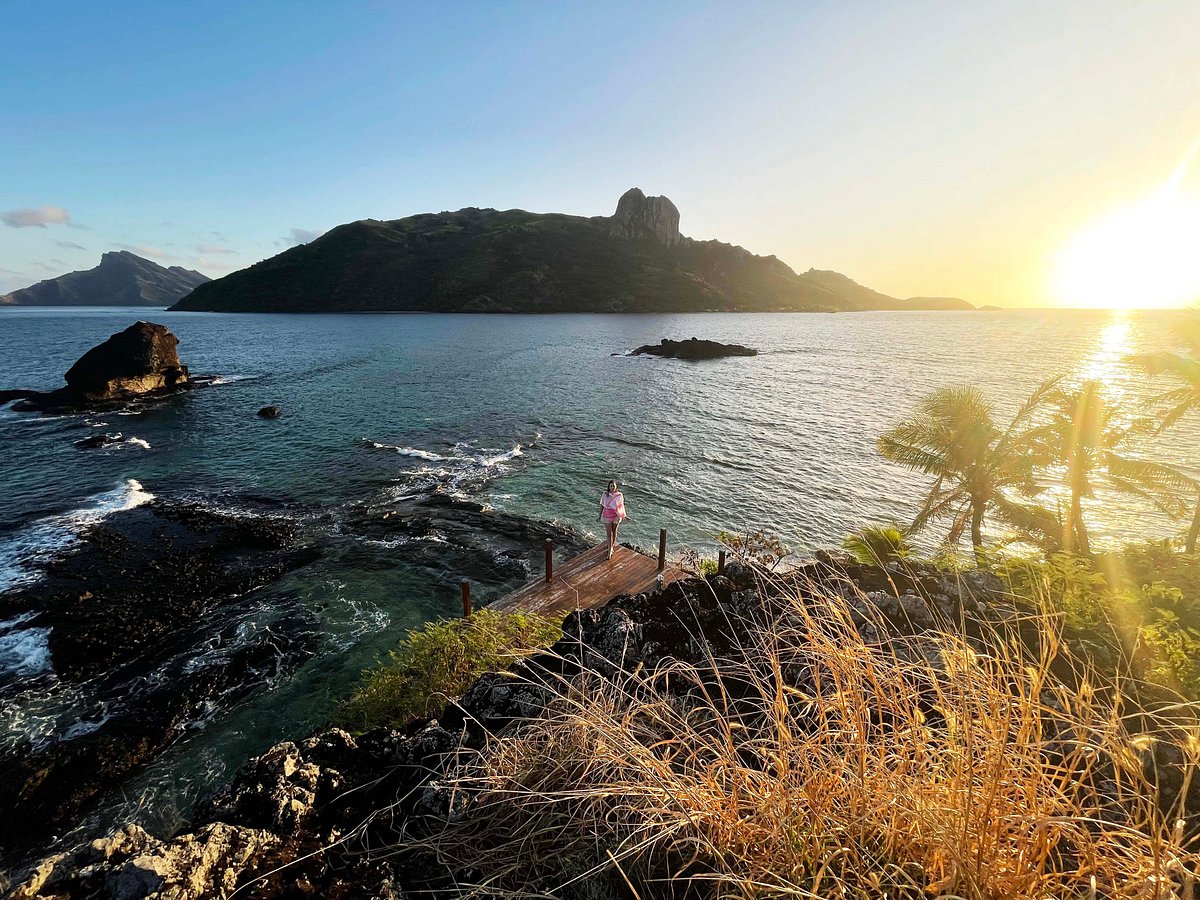
Positioned at the end of the wooden walkway, this spot provides a panoramic view of the volcanic peaks meeting the turquoise lagoon. Stand near the railing for clear framing of the island landscape.
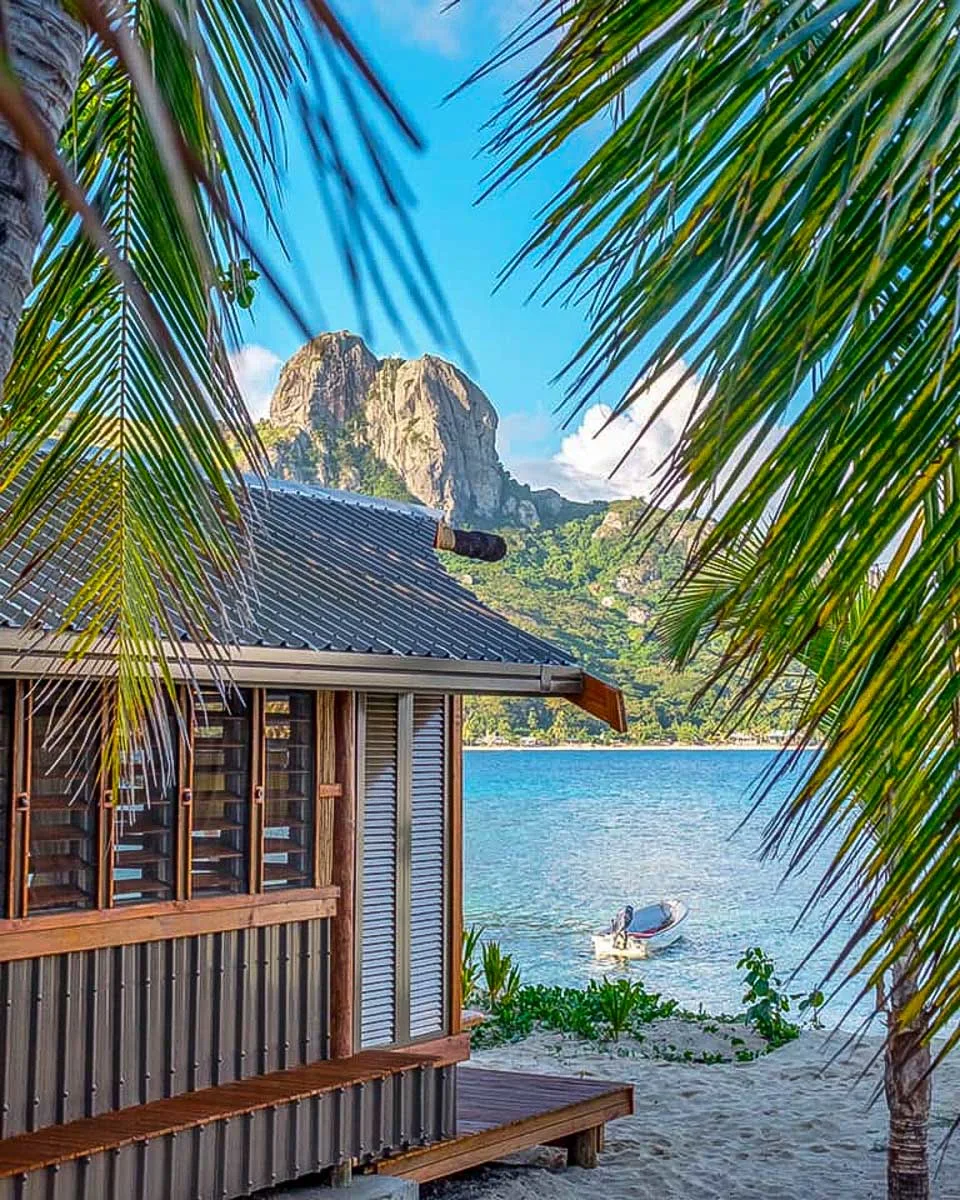
Located at the resort crest, this vantage point captures the contrast between the lush interior and the outer reef where the fiji shark dive kuata takes place. Use a wide lens to incorporate the horizon line.
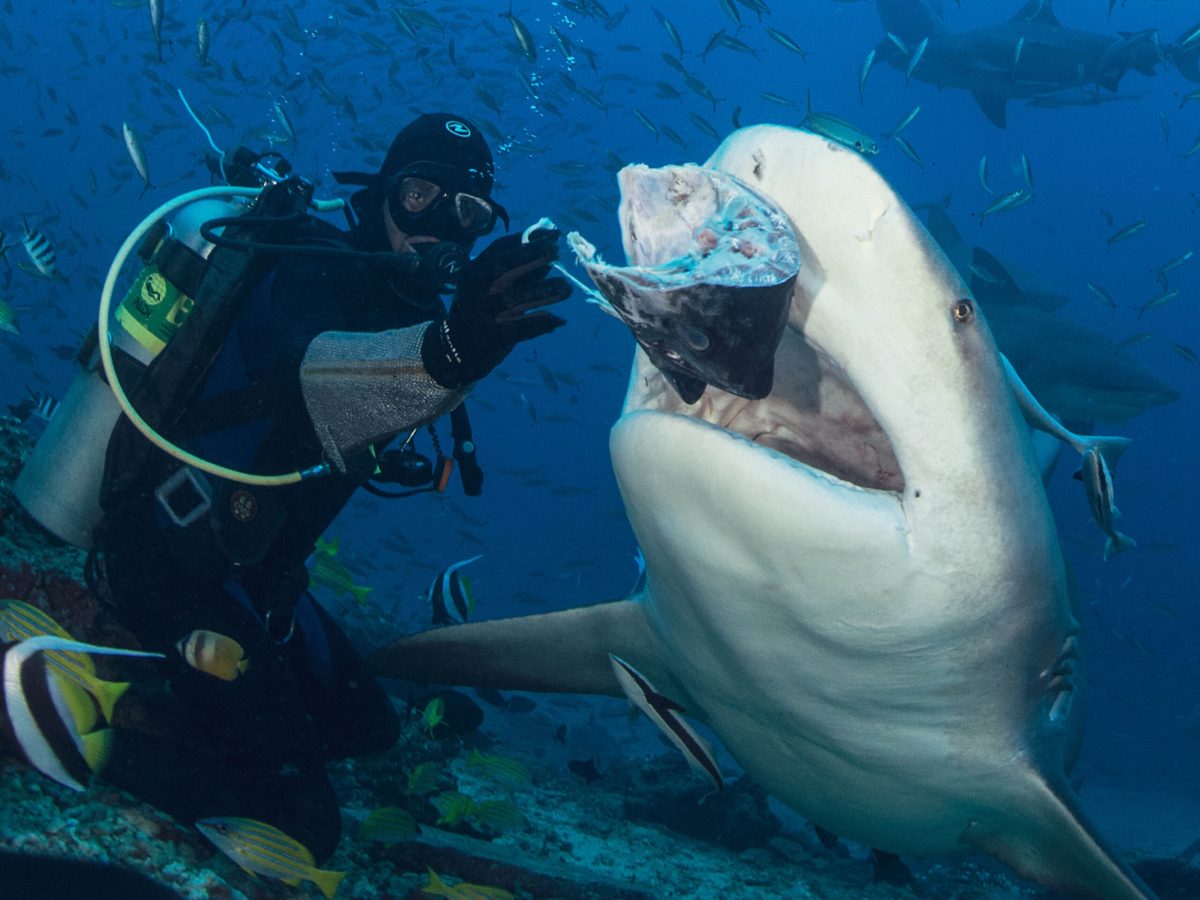
This underwater location is where photographers capture the apex predators against the backdrop of vibrant coral formations. Stay close to the dive master to ensure steady framing of these marine encounters.
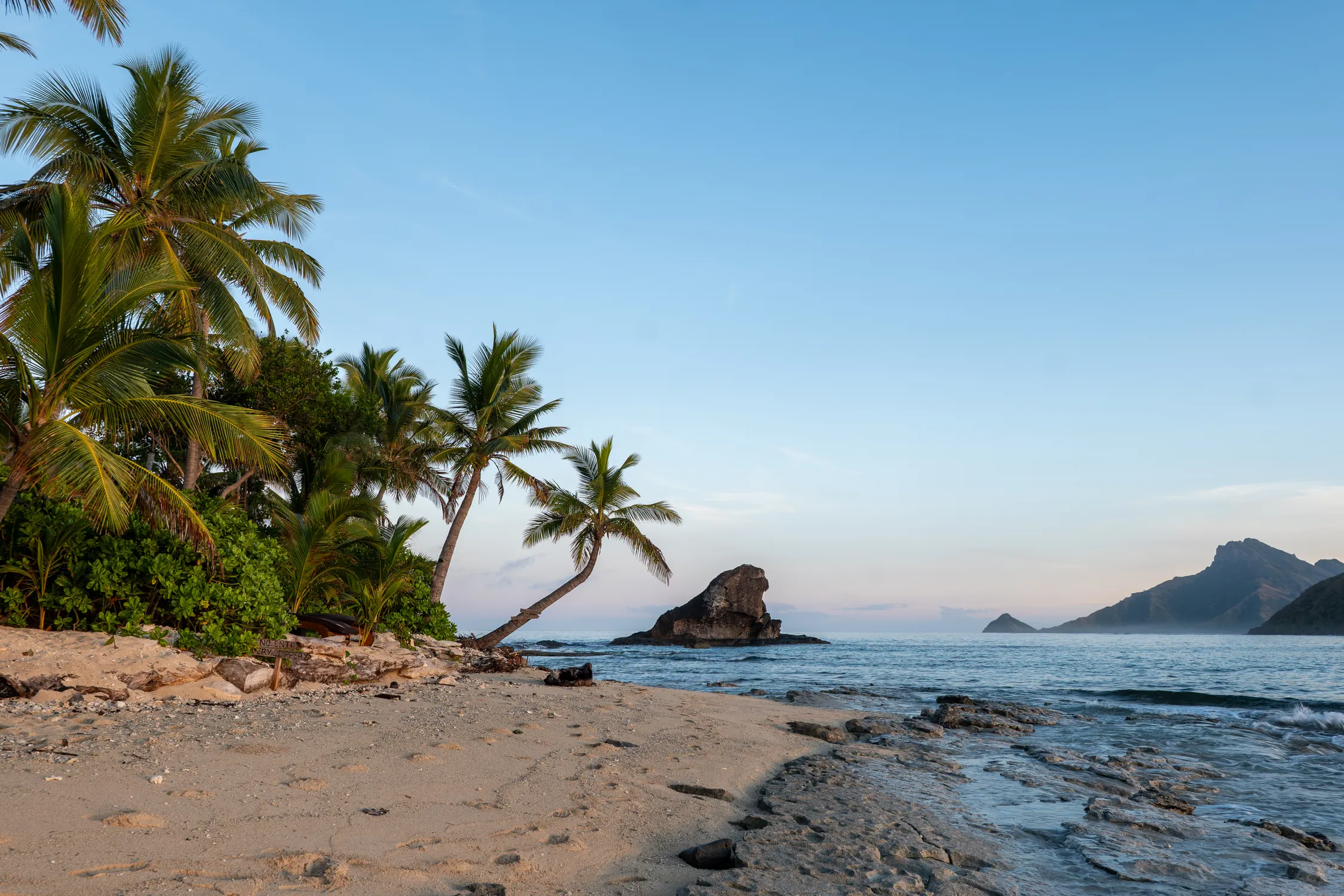
Walk along the northern shore to photograph the jagged basalt rock formations typical of the Yasawa Islands. This frame offers a grounded perspective of the island geology before your fiji shark dive kuata tour.
Visiting the Yasawa Islands with children is a rewarding experience, as the fiji shark dive kuata offers a unique opportunity to encounter marine life in a safe, controlled environment. Families will find a relaxed, nature-focused atmosphere where young adventurers can connect with the ocean.
The resort provides family-friendly amenities including high chairs, cribs, and a dedicated nanny service for younger children. While the island environment is rustic, the onsite restaurant caters to families with specific children's menus and meal plans.
While snorkeling is accessible for confident young swimmers, the fiji shark dive kuata tours for introductory scuba diving have a minimum age requirement of 14 years. Younger children can still enjoy the reef and shallow-water snorkeling under close supervision.
The terrain is natural and volcanic, so strollers are not practical for navigating the island grounds. For guests arriving by boat, the new hub features step-free pontoon access designed for wheelchair users.
To get the most out of your visit, plan your arrival between 07:30–11:00 to align with the optimal morning shark activity and dive schedules. Since fiji shark dive kuata tickets and dive slots are popular, visiting the dive shop upon check-in is essential for confirming your activity times.
Indoor activities include board games and cultural programming like traditional dance and live music. When water conditions permit, the sheltered lagoon remains a reliable spot for casual swimming and exploring the local marine sanctuary.
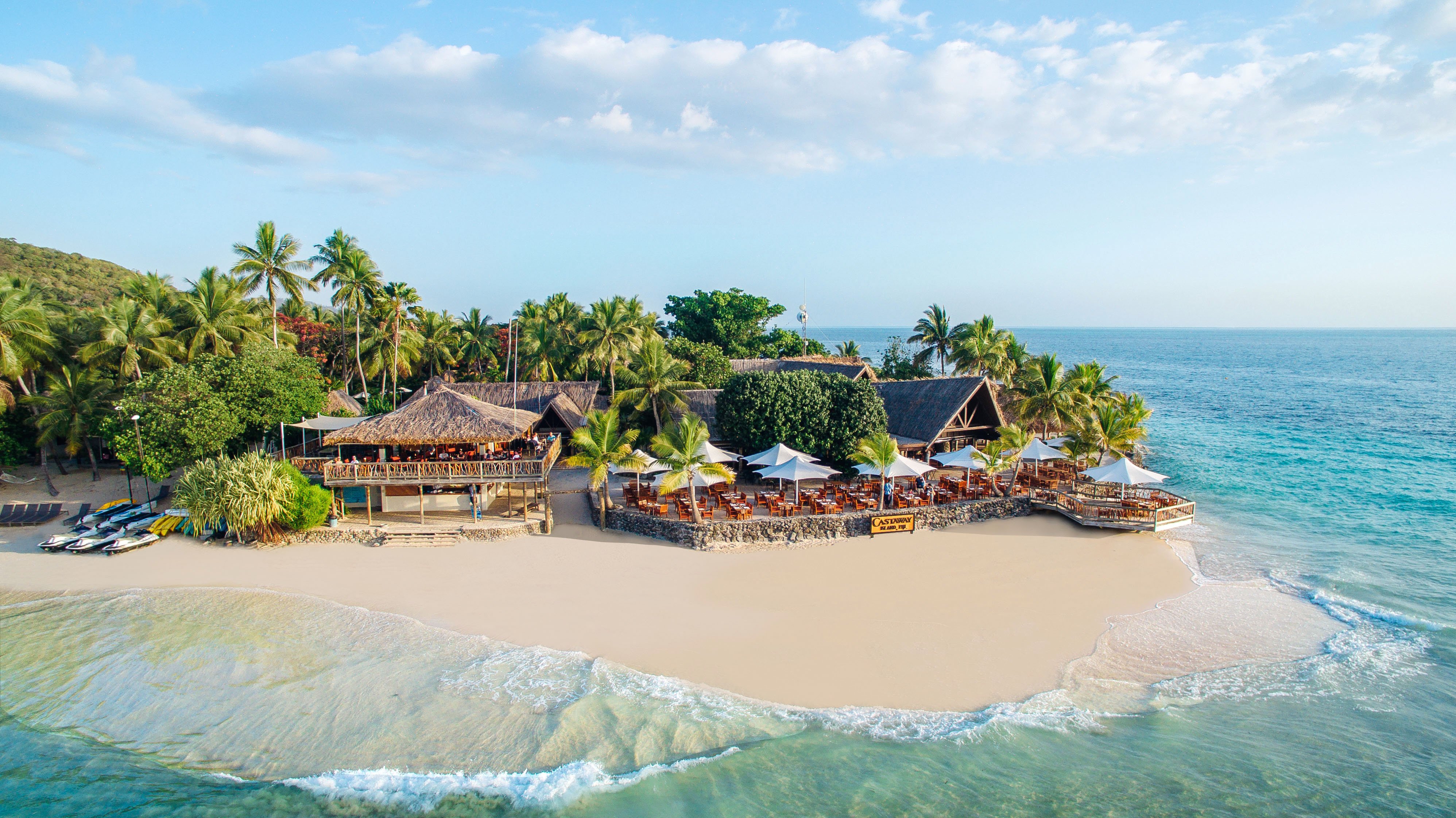
Dining is centralized at the Barefoot Kuata Island Resort, which serves as the primary hub for those visiting for a fiji shark dive kuata. Because the resort is remote, most guests rely on inclusive meal plans provided on-site rather than seeking external restaurants.
The main dining area offers buffet-style meals featuring fresh tropical fruit and local Fijian ingredients, perfect for refueling after fiji shark dive kuata tours. It provides a relaxed communal atmosphere where participants discuss their marine encounters.;Beachfront Bar
Everything you need to know for your journey
The facility is open daily from 07:30–19:00.
Yes, there is a 25 FJD marine conservation fee per person for the fiji shark dive kuata.
The best arrival window is 07:30–11:00 for optimal shark activity.
Yes, you are encouraged to bring an underwater camera to capture your experience.
Please check with Barefoot Kuata Island Resort for specific age and safety requirements.
Basic swimming skills are required for the fiji shark dive kuata to ensure participant safety.
Cancellations within 48 hours may be subject to fees at the Barefoot Kuata Island Resort.
Food is not permitted on the boats, but you can dine at the resort.
The activity is located at Barefoot Kuata Island Resort, Yasawa Islands, Fiji.
Photography is allowed and encouraged during the shark observation sessions.
Join thousands of happy travelers who have discovered this incredible experience
Book Your Experience Now